
 RSS Feed
19
History of Manito Park
Becoming Manito Park
Written by Abbey Parsons
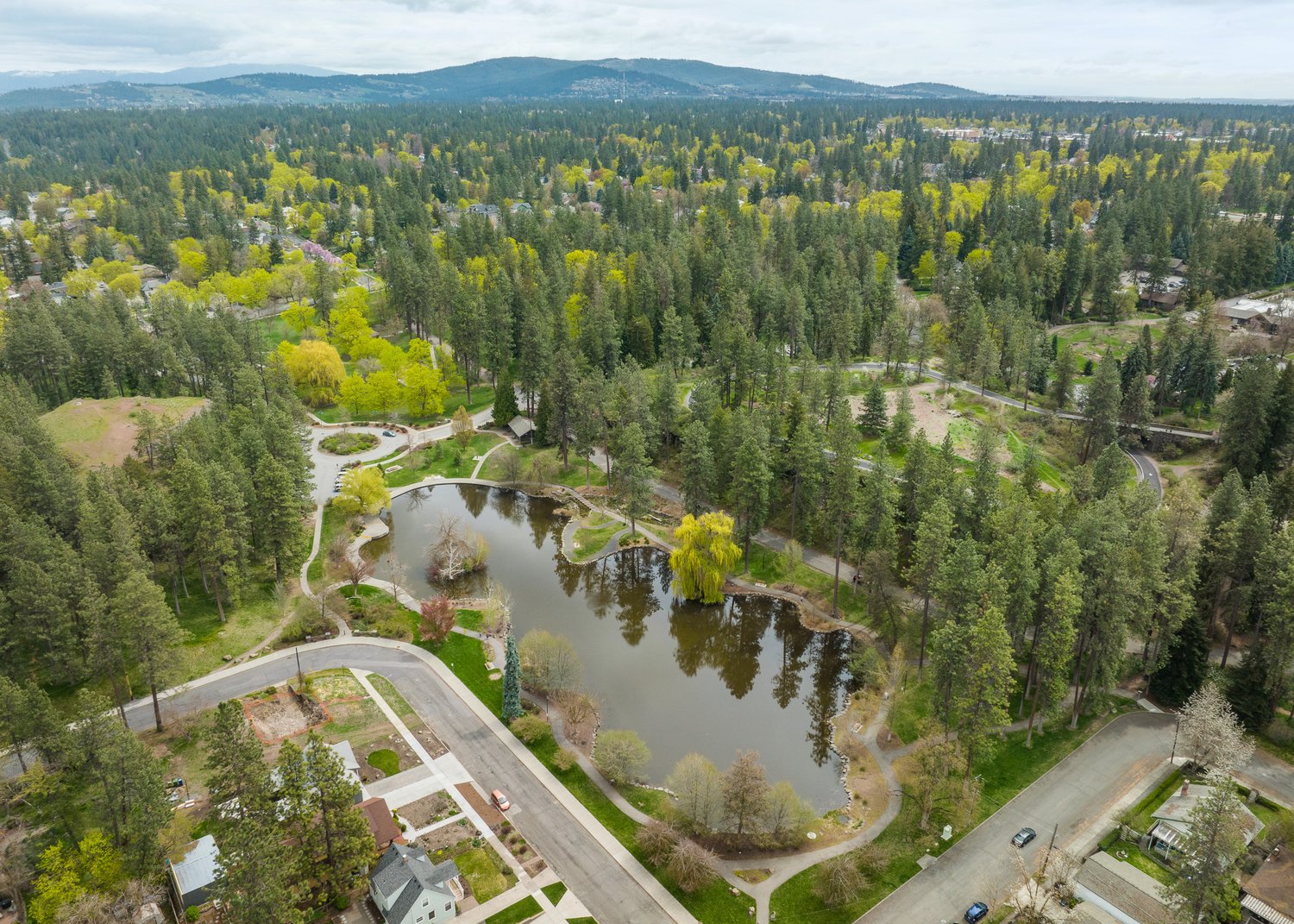
Like a jewel on the brow of Spokane's South Hill, Manito Park is a magnet for about 150,000 people per year. Don't be deceived, however, by its air of serenity, for, behind every tranquil square foot lie more than a century of enterprise, hope, disappointment and renewal. Here are the major stepping stones by which the park came to be the priceless resource it is today.
1891 – City of Spokane began formally accepting donations of land for public parks, including what was provisionally named "Montrose Park."
1903 Montrose Park was officially dedicated to the city and its name changed to Manito Park.
1905 – The Parks Department started acquiring animals for a zoo. At one time the zoo had as many as 165 animals.
1908 - The Olmsted report was submitted to the Spokane Park Board. However, it was not released to the public until 1913. It is a popular misconception that Manito Park was designed by the Olmsted Brothers, but the content of their report, which describes an existing layout, confirms that they did not design it.
1912 –Sunken Garden created – a formal European formal garden.
1932 – The Zoo is closed because of the looming depression.
1941 – Sunken Garden was renamed to Duncan Gardens to honor John Duncan, park superintendent from 1910 to 1942.
1941 – The Rose Garden is created
1967 – In honor of Nishinomiya, Japan, Spokane's sister city, landscape architect Nagao Sakurai began the design for the Japanese Garden. He suffered a stroke in 1973 and his designs were completed by Shosuke Nagai and Hirohiko Kawai.
1974 – The Nishinomiya Tsutakawa Japanese Garden was dedicated.
1974 – Gaiser Conservatory was renovated in anticipation of the World Expo, making it possible for the public to enter for the first time.
1988 – The central dome was added to the Gaiser Conservatory.
2007 - All-American Rose Selections chose Manito Park's Rose Hill as the best rose garden in the nation.
2015 - Manito Park and Boulevard was placed on the National Register of Historic Places.
2019 – The Mirror Pond Reclamation Project began.
2022 – The Mirror pond is completed and Washington Trust Bank Donates the sculpture of two swans, meant to represent the community's love for the park, its beauty and history. The piece was created by local Spokane artist Vincent De Felice, and symbolized a return of swans to the site after two almost decades. Manito Park was home to mute swans since its founding. They were removed, however, in 2006 to protect the birds' health and safety. Swans are not native to Spokane, and do not easily thrive here.
The uniqueness of Manito Park lies in its ability to serve the needs of every segment of our region. With a formal garden, perennial garden, lilac grove, conservatory, pools, fountains, picnic and play facilities, it is really many parks fused into one by the determination, hard work and love of a grateful community.

|
 |
